The role of distributed computing in Generative AI and Agentic AI
The Distributed Engine Powering Generative and Agentic AI
The explosive capabilities of modern AI—from crafting human-like text to orchestrating autonomous agents—are not the product of a single, super-powered computer. They are the result of a sophisticated, often invisible, backbone: distributed computing. By spreading immense computational workloads across vast networks of machines, from cloud data centers to edge devices, distributed systems make the training, deployment, and coordination of advanced AI not just possible, but practical and scalable.
Why Distributed Computing is the Bedrock of Generative AI
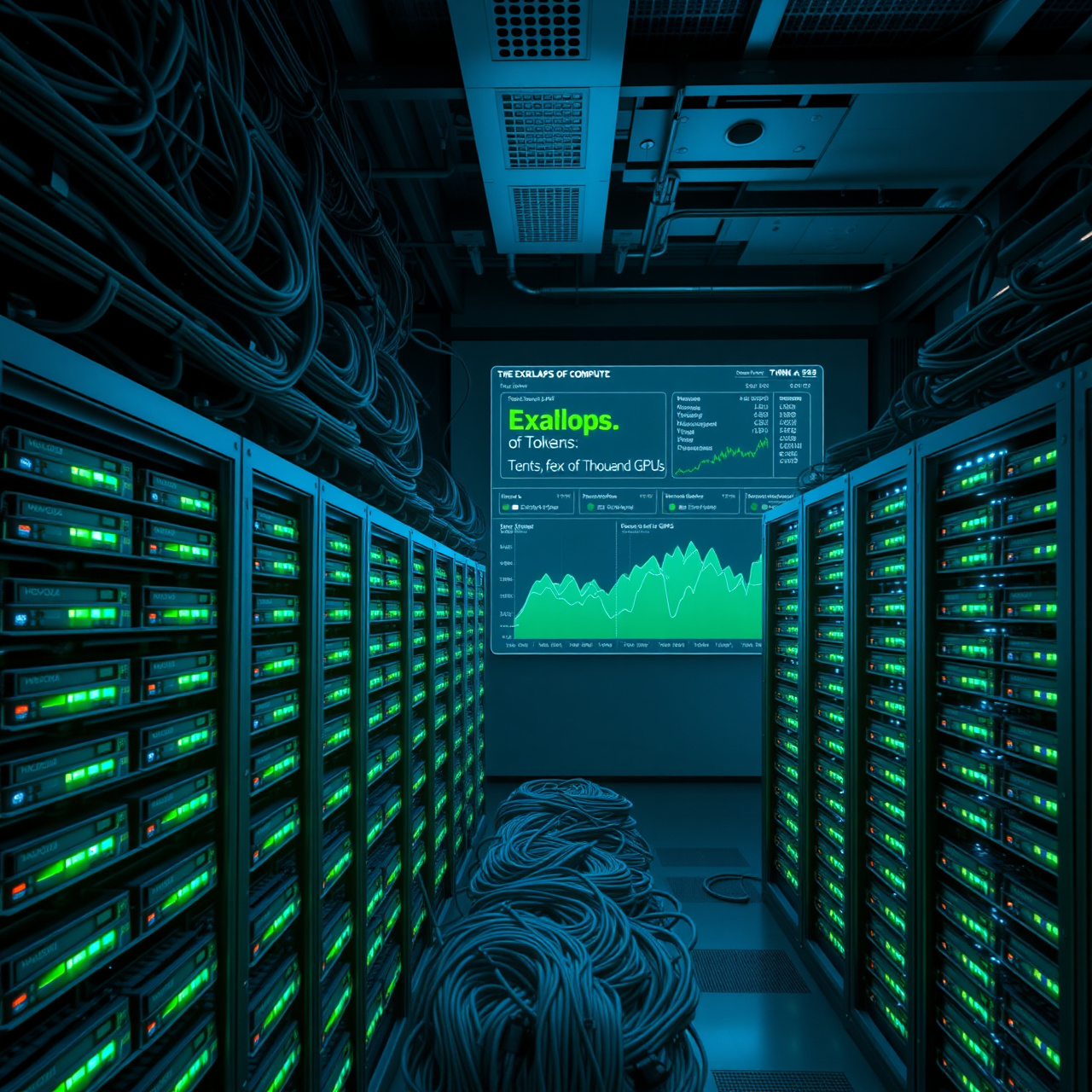
Generative AI models like large language models (LLMs) and diffusion models are computational behemoths. With hundreds of billions of parameters trained on trillions of data tokens, their resource demands reach the exascale, far beyond any single server. This is where distributed AI infrastructure comes in, leveraging large clusters of GPUs interconnected by high-speed networks.
The core challenge is managing scale and memory. Limited GPU memory (VRAM) is a primary bottleneck. To overcome it, engineers employ sophisticated parallelism strategies, often called 5D parallelism:
- Data Parallelism: Replicating the model across many nodes, each processing a different data batch.
- Tensor/Model Parallelism: Splitting the model's weight matrices across multiple GPUs.
- Pipeline Parallelism: Distributing different layers of the neural network across separate machines.
- Sequence/Context Parallelism: Dividing long input sequences (like lengthy documents) across devices to handle massive context windows.
- Expert Parallelism: Distributing specialized sub-models in Mixture-of-Expert (MoE) architectures.

These techniques, combined with memory optimization methods like gradient checkpointing and offloading, allow for the training of ever-larger models. Furthermore, the entire data pipeline—from assembling massive datasets to generating synthetic data—relies on distributed data processing to keep thousands of GPUs continuously fed.
The need for distribution doesn't end at training. Distributed inference is crucial for serving these giant models in production, using sharding and replication to deliver high-throughput, low-latency responses. This infrastructure also powers Retrieval-Augmented Generation (RAG), where vector databases and search engines run as distributed services alongside the LLM.
Enabling the Autonomous Future: Distributed Computing for Agentic AI
Agentic AI refers to systems where AI agents can autonomously perceive, plan, and act using tools in multi-step workflows. These systems are inherently distributed, requiring coordination across cloud and edge environments.
A distributed AI architecture is fundamental. Powerful foundation models and global knowledge bases reside in the cloud, while lightweight, responsive agents operate at the edge—in factories, vehicles, or IoT devices—for real-time decision-making. This split allows for scalable intelligence with minimal latency.

Implementing such a system involves decomposing an agent's goal into subtasks that can be processed in parallel across different nodes. This requires robust distributed coordination, leveraging classic algorithms for reliable communication, consensus, and fault tolerance—the very protocols that keep distributed systems running smoothly. Interestingly, a new frontier is using Generative AI itself to help design and synthesize these complex distributed algorithms.
The relationship becomes a virtuous cycle. Agentic AI frameworks orchestrate tasks across distributed compute resources (CPUs, GPUs, specialized hardware). In turn, AI agents are now being used to optimize the distributed systems they run on. By analyzing performance telemetry, generative models can recommend configuration changes, creating a self-improving loop where AI manages the infrastructure that powers it.

The Symbiotic Future
The trajectory is clear: the future of advanced AI is inextricably linked with distributed computing. Generative AI provides the core cognitive capabilities, but it is both a massive consumer and a novel designer of distributed systems. Agentic AI provides the orchestration layer, deploying those capabilities across a distributed fabric of cloud and edge resources to interact with the real world.
This synergy drives key technical themes: massive scalability, efficient communication, rigorous fault tolerance, and continuous resource optimization. As models grow more capable and agents more autonomous, the underlying distributed engine will only become more critical, evolving from a silent supporter to an active, intelligent participant in the AI ecosystem.